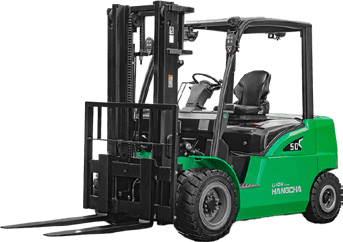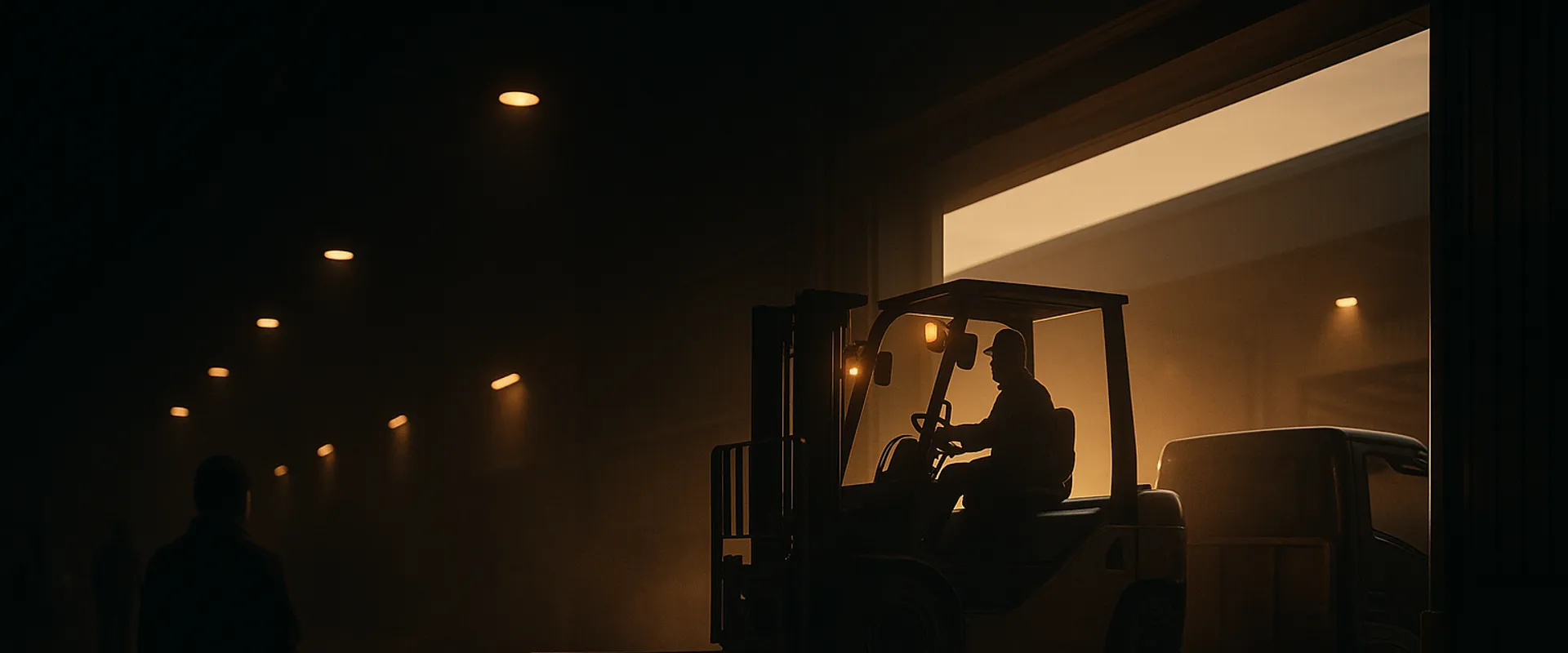
A forklift is a formidable production tool, but also one of the most accident-prone machines on an industrial or logistics site. Most serious incidents, tip-overs, pedestrian strikes, dropped loads, are not caused by a technical failure but by an ignored operating rule. The good news is that these rules are simple, well known, and shared by every safety professional. Applying them protects your operators, your ground crews, your goods, and the continuity of your business at the same time. Here are the essential rules that frame safe operation.
Trained and authorized operators
The first rule is not about the machine but about the person. Operating a forklift requires training matched to the truck type and a formal authorization issued by the employer. An operator competent on a counterbalance truck is not automatically competent on a stacker, a reach truck, or a higher-capacity machine.
Authorization assumes the employer has confirmed the operator knows the machine, the site, and its rules. That responsibility is ongoing: an operator changes role, a new machine arrives, and the training has to keep pace. Handing a forklift to an untrained person, even "just to move one thing," is a serious mistake.
Seatbelt and the tip-over rule
Wearing the seatbelt is non-negotiable. In a tip-over, the natural instinct to jump clear of the cab is the worst one: the operator ends up crushed under the overhead guard or roll cage. The rule is clear and counterintuitive: stay belted, brace yourself, and lean away from the direction of the tip. The belt and the cage form a survival space; leaving it mid-rollover exposes you to being crushed.
This of course means staying inside the operator's compartment at all times: arms, legs, and head within the machine's profile, never any part of the body outside the cab during maneuvers.
The stability triangle
Every counterbalance truck rests on a stability triangle whose corners are the two front wheels and the pivot of the rear axle. The center of gravity of the truck-plus-load must stay inside this triangle. The moment it moves outside, the machine tips.
Three actions shift that center of gravity and threaten stability:
- Lifting a load raises the center of gravity and shrinks the stability margin, especially at height.
- Turning, particularly fast or sharp, generates a force that pushes the center of gravity toward the outside of the triangle.
- A load that is too heavy or badly placed moves the center of gravity forward.
Combining these factors, for instance turning with a raised load, is the classic recipe for a sideways tip-over. Driving smoothly, with the load low, is the best protection.
Load handling and travel
How you carry a load matters as much as how you drive. A few principles apply:
- Travel with forks low, about fifteen centimeters off the ground, mast tilted slightly back to settle the load.
- Never travel with a raised load: lift only when stacking or placing, not during travel.
- Respect the data plate and capacity chart: no overload, and no load center further out than the machine allows.
- Match your speed to the floor, the visibility, and the load, and travel in reverse when the load blocks your view.
A load that is well settled, low, and within the machine's limits removes a large part of the risk from the start.
Shared spaces and daily inspection
A forklift rarely operates alone. Sharing space with pedestrians is a critical point: separate the flows where possible, mark the aisles, sound the horn at blind corners and intersections, keep speed down, and maintain a safe distance. On ramps and loading docks, take extra care: enforce a direction of travel, chock the trailers, and stay alert to the edge drop at the dock.
Finally, safety starts before the first movement, with the pre-shift inspection. A short, systematic check saves far more time than a breakdown in the middle of operations:
- Brakes and parking brake
- Steering and hydraulic controls (lift, tilt)
- Horn, lights, and warning signals
- Tires, forks, and chains
- Fluid levels and no leaks
- Seatbelt, overhead guard, and emergency stop
Any fault found must be reported and logged, and the machine taken out of service until it is resolved. An operator who knows they can report a problem without pressure is an operator who does.
A well-maintained fleet is a safer fleet: explore our maintenance contracts.