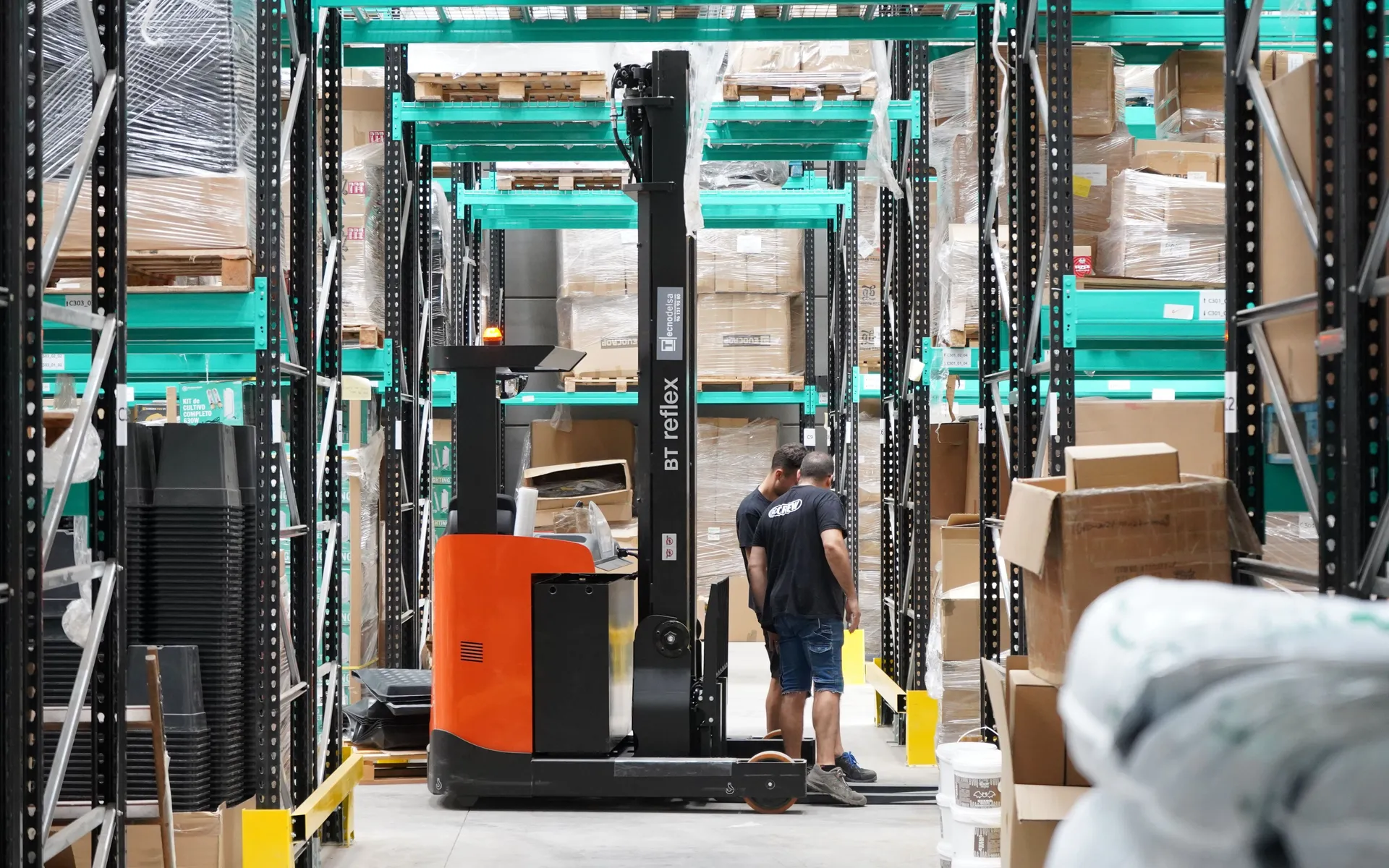
Inside a warehouse, order picking accounts for a large share of labor time and logistics cost. Every item picked means a trip, a grab at the right level, and a drop onto the collection support. Multiplied by hundreds of lines a day, even a minute saved per cycle turns into real productivity. The order picker is the machine built for exactly this task: it brings the operator up to the product instead of forcing them to bend or climb. This guide explains what sets it apart from other trucks, how to match it to your racking, and where the real gains come from.
A machine built for picking
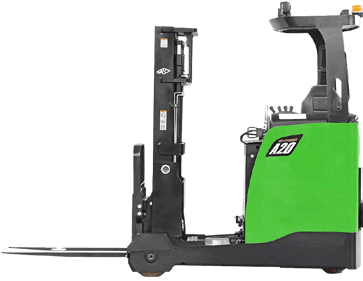
An order picker is not the same thing as a pallet truck or a reach truck. A pallet truck moves a full pallet from point to point; a reach truck stores and retrieves pallets at height. The order picker, by contrast, builds an order from several items: the operator rides up with the platform and stands directly in front of the pick face.
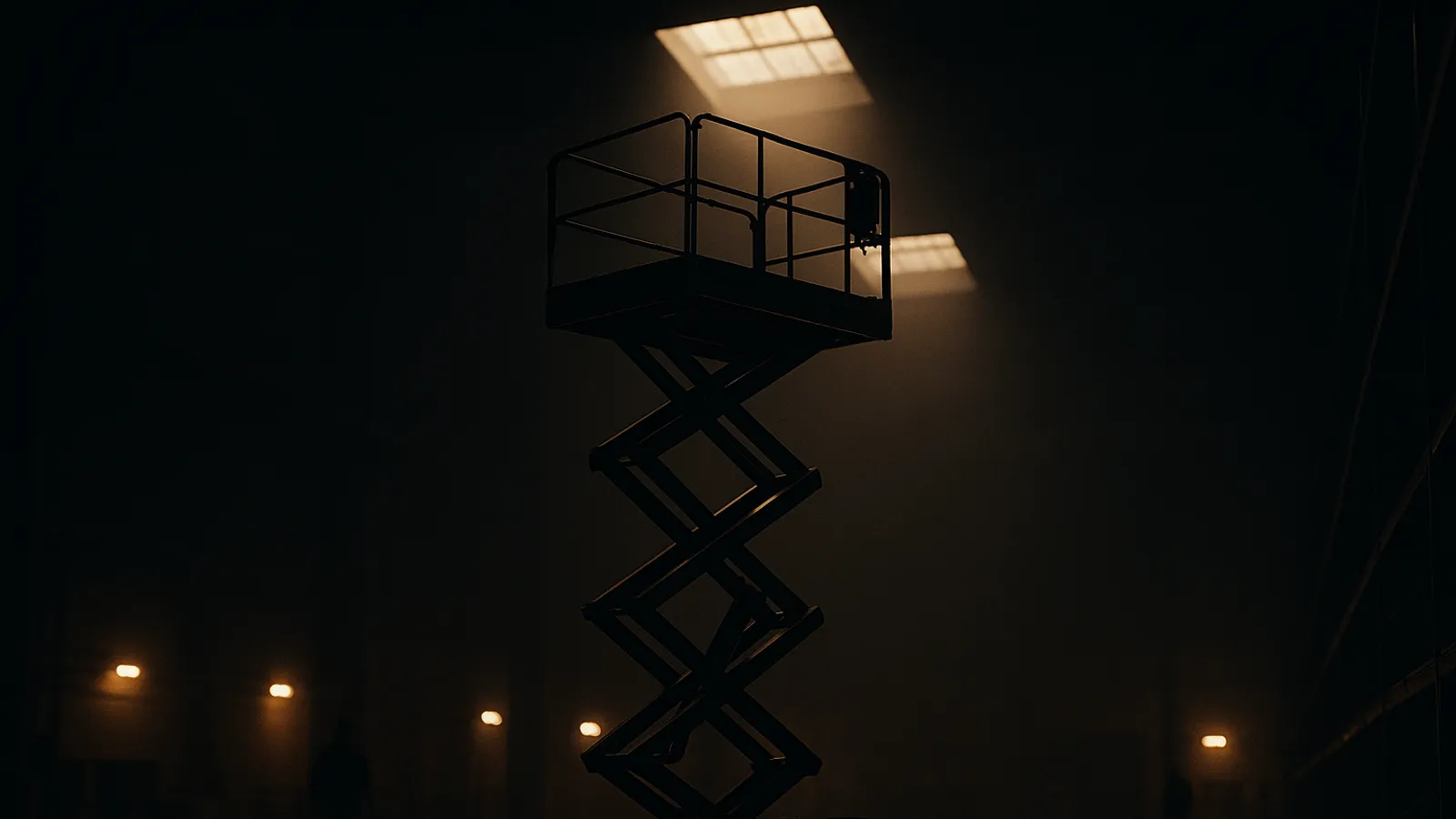
On mid and high-level models, the operator rides a platform that rises along the mast. They pick at the right height, place items on the pallet or support that rises with them, then move on to the next location without coming back down needlessly. This "the operator goes to the product, at the right height" logic is what separates a picker from a plain transport truck.
Ground, mid and high-level picking
The right machine depends above all on the height of the pick locations.
- Ground-level (low-level) picker. The operator stays at floor height and picks from the lowest racking levels. Ideal for ground picks, fast-moving zones, and heavy or bulky items.
- Mid-level picker. The platform rises a few metres to cover two or three racking levels, without needing a tall machine.
- High-level picker. The cab travels up the mast to reach the upper racking levels, where manual picking would be impossible or unsafe.
The rule is simple: the machine's pick height must match that of your highest locations. A machine that comes up short leaves levels out of reach; an oversized one costs more and maneuvers less easily in narrow aisles.
The productivity levers
The productivity gain does not come from a single feature, but from cutting out small movements repeated thousands of times.
- Fewer trips. By riding up with the collection support, the operator prepares several lines per pass instead of returning to the floor between grabs.
- Ergonomic pick heights. The product comes up to working height, which reduces bending, twisting, and fatigue, and with it the stops and errors that pile up late in a shift.
- Faster cycle times. Travel, lift, and grab flow on the same machine without a break, which lowers the time per line picked.
For e-commerce and distribution, where lines per order are high and lead times are short, these cumulative gains are the difference between an order shipped on time and one that slips.
Safety at height
Working in elevation calls for strict rules, shared by every manufacturer and safety professional.
- Harness and anchor point. On high-level pickers, wearing a harness clipped to the platform's designated anchor point is the rule whenever the operator works in elevation.
- Guardrails and protections. The platform must keep its perimeter guarding and must never be climbed over to reach a distant location.
- Trained, authorized operators. Operating a picker at height requires training matched to the machine and a formal authorization from the employer.
- Floor and aisle conditions. A flat, clean floor, clear aisles, and racking in good condition all govern the machine's stability when elevated.
Never overload the platform, and never lean out beyond the guarding to reach an item: those two prohibitions prevent most incidents.
Fitting the machine into the operation
An order picker only delivers its full value when the warehouse is built around it. Aisle width must let the loaded machine travel and maneuver; clear location addressing and legible labelling cut search time; and placing fast-moving items at the most accessible levels reduces the number of lifts. Racking height, finally, has to stay consistent with the pick height of the machine you choose. It is the fit between truck, racking, and organization that produces the gain, far more than the spec sheet alone.