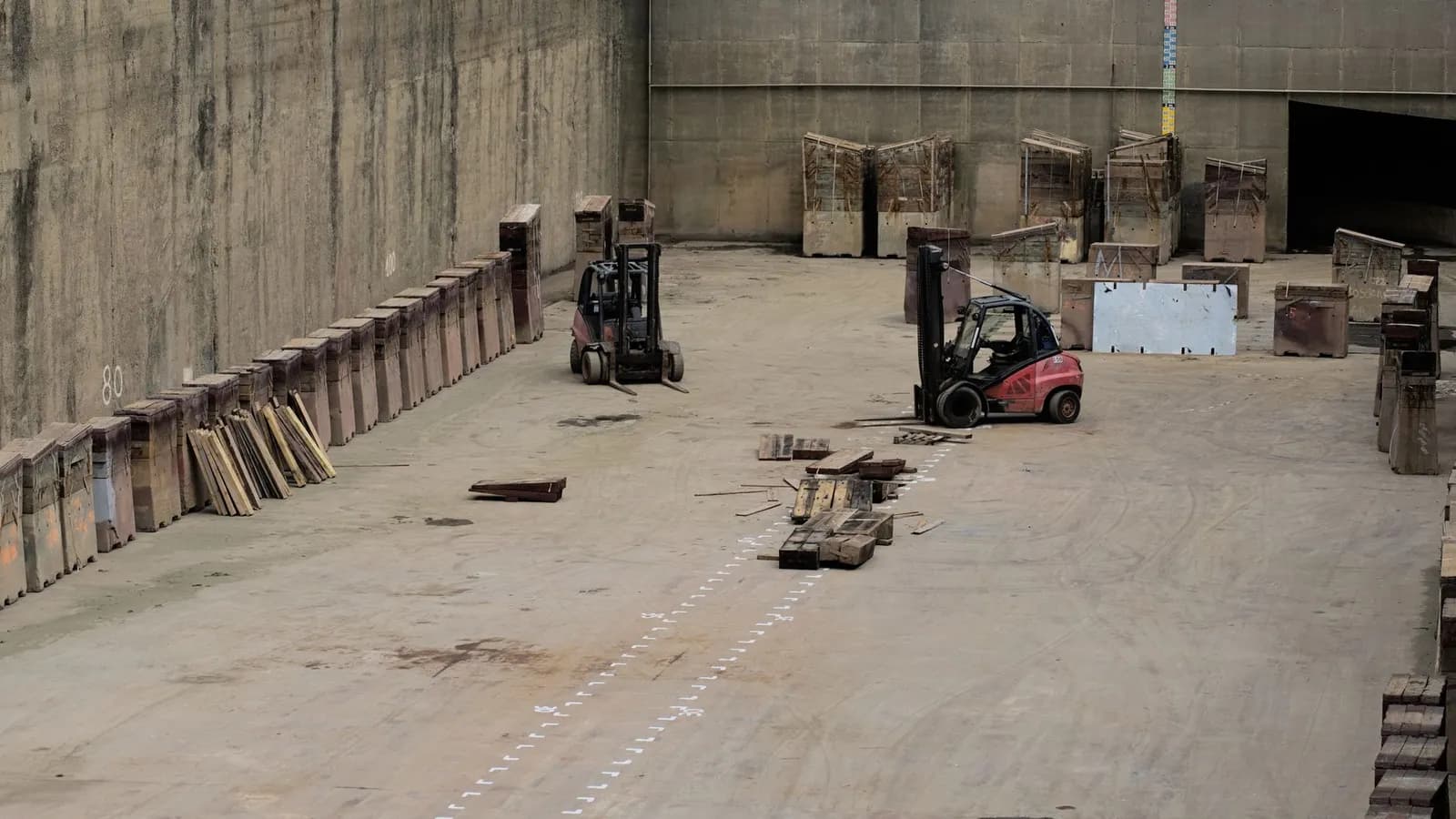
An industrial site cannot be served by a single machine. Between receiving docks, storage aisles, production lines, and outdoor loading areas, the requirements change at every station. The sound approach is to start from your actual flows, load by load and trip by trip, then match each use case to the most suitable family of equipment, rather than buying one do-it-all machine that does everything by halves.
In short: for a workshop or a factory, the backbone of an industrial fleet is a forklift for heavy loads and truck loading, a stacker for higher storage in narrow aisles, a pallet truck for short ground-level transfers, and the accessories (forks, batteries, chargers, tires) that adapt these machines to your activity. The choice of power source and the indoor or outdoor scope then determine the exact models, and renting lets you absorb load variations without oversizing the fleet.
Map the flows before choosing the machines
Before reasoning machine by machine, reason flow by flow. On an industrial site you almost always find four main movements: receiving and unloading at the docks, putaway to the storage zones, feeding the production stations, then dispatch. Each one sets a typical load, a distance, a stacking height, and a floor type.
For each flow, list the heaviest load to move, the height to reach, the aisle width, and the distance travelled. Done on the ground, this survey avoids two common mistakes: undersizing a machine that will struggle at its rated load, or oversizing one that will not fit through the aisles. It is also the basis of the free needs assessment we carry out before any proposal.
Match each equipment family to a use case
The six families in the HER range cover most of what an industrial site needs.
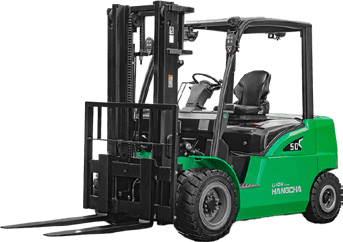
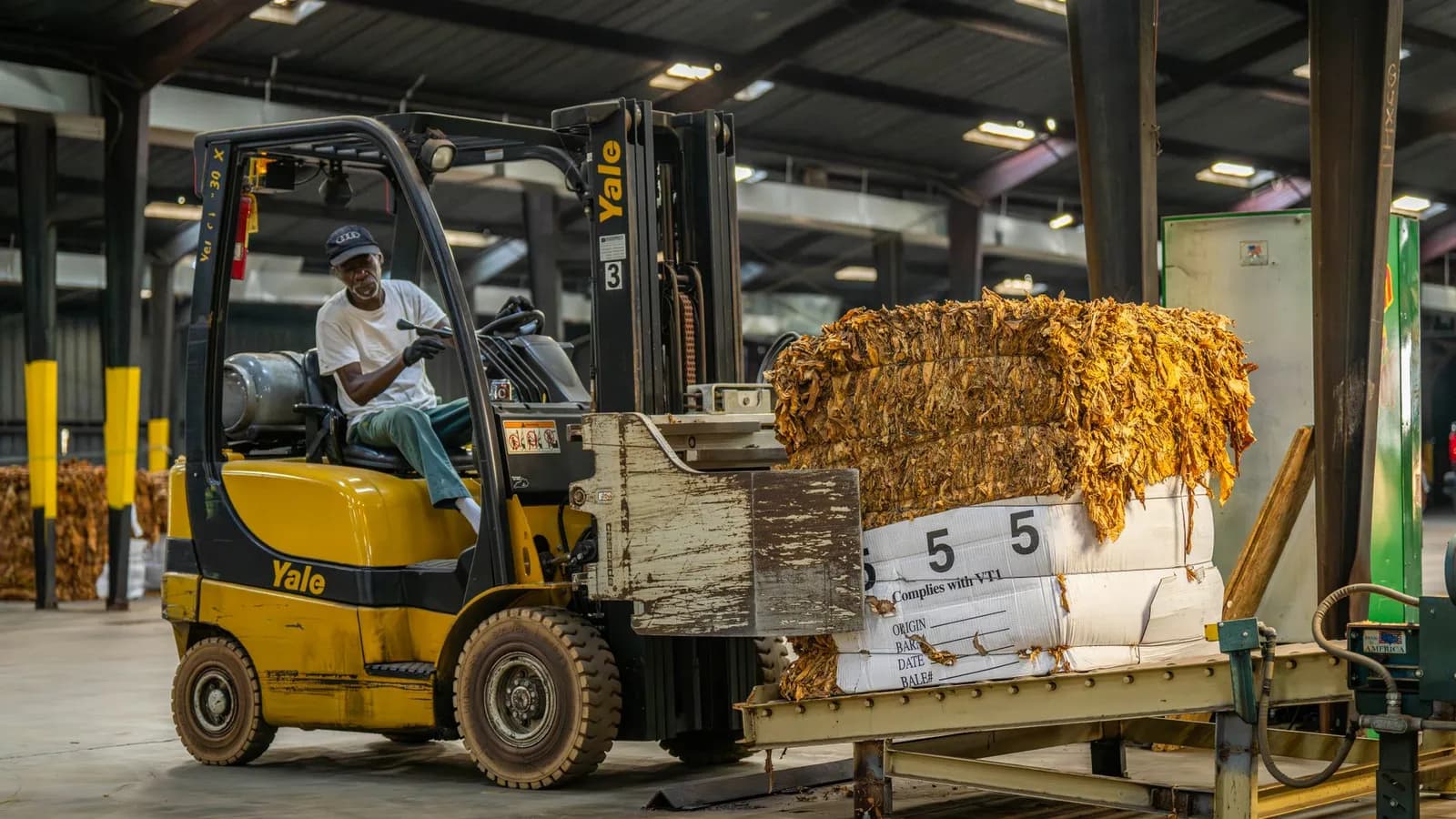
- Forklifts. The core of the fleet for heavy loads, loading and unloading trucks, and stacking outdoors or under cover. Available in diesel, LPG, and electric, they suit both outdoor yards and active production halls.
- Stackers. For higher storage in aisles narrower than a forklift's, indoors. Electric or semi-electric, they fit the middle ground between the pallet truck and the forklift.
- Pallet trucks. For horizontal ground-level transfer over short distances: unloading pallets, feeding a line, staging at the dock. Manual for occasional use, electric as turnover increases.
- Reach trucks and order pickers. For high-bay storage in narrow aisles and piece-level order picking, typical of dense industrial warehouses.
- Storage equipment and accessories. Forks, batteries, chargers, tires, and other parts that adapt a machine to a specific load or floor.
On most sites these families do not compete: they complement one another in a mixed fleet, each on the flow segment where it is most efficient.
Indoors or outdoors: the power source decides
The working environment directly steers the choice of power source. Indoors, on a finished floor and in an enclosed atmosphere, electric is the obvious call for its tailpipe-emission-free running and a noise level compatible with an active workshop. Tracking the battery and chargers then becomes a maintenance item in its own right, one we build into our contracts.
Outdoors, across yards, docks, and less even ground, diesel and LPG keep the edge in endurance and continuous availability. Many industrial sites in practice run on a mixed fleet: electric indoors, combustion outdoors. To weigh it station by station, our comparison of diesel, LPG, and electric forklifts lays out the deciding criteria. And if your site includes dock activity or container handling, the article on handling equipment in port logistics rounds out the analysis for inbound and outbound flows.
Build a mixed fleet that lasts
An industrial fleet is not a single purchase, it is a set to assemble and grow over time. Four HER levers let you tune it to your real activity:
- Sale, new or inspected used, for the machines that work year round and form the stable core of the fleet.
- Flexible rental, short, medium, or long term, to absorb an activity peak, equip a temporary project, or trial a model before buying, without tying up capital.
- Preventive and corrective maintenance, with tailored contracts, overhauls, regulatory safety checks, and an intervention sheet at every visit, to limit breakdowns and keep the fleet compliant.
- After-sales service and breakdown support, with fast diagnosis, on-site intervention, and genuine parts, whose priority is to minimize production stoppages.
The cost of a fleet is not just the purchase price: energy, maintenance, capital tied up, and downtime all weigh over time. To reason across the whole life cycle rather than the entry ticket alone, see our piece on the total cost of ownership of a handling fleet.
Keep the equipment safe and long-lived
Whatever the fleet's makeup, lasting performance rests on maintenance and compliance. Preventive maintenance (general overhauls, regulatory safety checks, and monitoring of batteries, chargers, and hydraulic circuits) reduces breakdowns and keeps the equipment compliant with the standards. When a machine is down, a responsive on-site after-sales service, with guaranteed genuine parts, limits the impact on production. On this point, long-term rental has a particular advantage: maintenance can be included depending on the package, and replacement equipment is provided in case of a breakdown, which secures operational continuity.
Building a coherent industrial fleet starts with a precise survey of your flows and loads. Request a free needs assessment: we map your stations and propose the combination of sale, rental, and maintenance suited to your site.